P90 Pickups vs Humbuckers: Understanding the Differences
When it comes to guitar pickups, many players often confuse humbuckers with P90s. While they share the goal of converting string vibrations into sound, these two types of pickups come with unique features and sound profiles that set them apart. In fact, understanding the distinctions between P90s and humbuckers is crucial for any guitarist aiming to find their ideal tone. In this article, we will explore both types of pickups in detail, discussing their origins, characteristics, and advantages to help clarify which might be best suited for your style of music.
Table of Contents
- P90 Pickups
- Humbucker Pickups
- Key Differences Between P90s and Humbuckers
- Similarities between Humbuckers and P90s
- Benefits of P90 Pickups
- Benefits of Humbucker Pickups
- Ideal Users for P90 Pickups
- Ideal Users for Humbuckers
- Conclusion
P90 Pickups
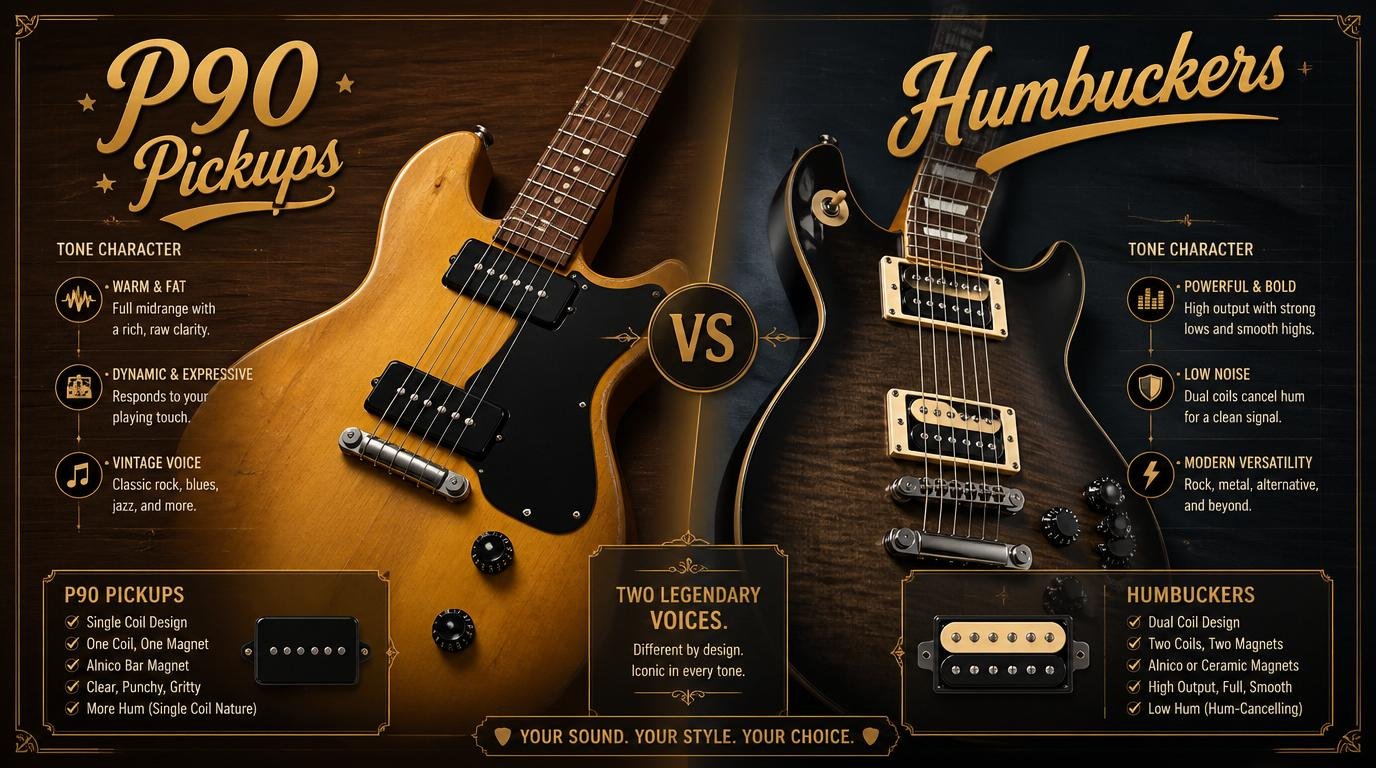
P90 pickups are a type of single-coil pickup that originated from Gibson in the mid-1940s. Their creation was significantly influenced by World War II, which delayed their market debut. P90s are known for their warmer tone compared to traditional single-coil pickups like soap bars, producing a balanced sound that is both characteristically bright and robust.
One of the hallmarks of P90s is their ability to produce pronounced mid-range frequencies, providing a punchy tone that many guitarists find appealing. While P90s can be vulnerable to electrical interference, there are now options available that feature hum-canceling properties. Brands such as Seymour Duncan and Gibson have worked to innovate this pickup type, resulting in active P90s that offer enhanced versatility.
This post contains affiliate links. If you make a purchase through my links, I may receive a small commission at no additional cost to you. I only recommend products I truly believe in.
Humbucker Pickups
In contrast, humbuckers use a dual-coil configuration designed specifically to eliminate the unwanted hum commonly associated with single-coil pickups. Their basic design involves two coils wired in opposite directions which effectively cancels out electrical noise, resulting in a smoother and thicker sound.
First developed in the 1950s, humbuckers quickly became popular among musicians looking for a fuller tone and greater resistance to feedback. Iconic models, such as those found in Gibson’s Les Paul guitars, are celebrated for their versatility, providing everything from crisp clean tones to overdriven rock sounds.
Key Differences Between P90s and Humbuckers
When comparing P90s and humbuckers, it’s essential to address the significant differences in tone and performance.
Tone Quality
P90 pickups are recognized for their bright, cutting sound that often shines in genres like blues, jazz, and pop. They tend to emphasize the higher frequencies and can create a distinctive character that many players adore. However, this brightness can also lead to unwanted noise and hum, which may not suit all playing styles.
On the other hand, humbuckers provide a more balanced tone across the frequency spectrum. Their thicker, warmer sound is often preferred in rock, metal, and hard rock contexts due to their ability to handle heavier distortion without becoming harsh.
Power and Volume
P90s generally produce lower output levels compared to humbuckers, making them quieter and less susceptible to certain types of tonal distortion. When playing overdriven or distorted, P90s indicate a more organic response while maintaining clarity.
Humbuckers, conversely, can generate higher output levels, ideal for driving amplifiers to create powerful overdriven sounds. Their ability to maintain low feedback levels is a crucial characteristic, especially for heavy music genres.
Frequency Response
In terms of frequency response, P90 pickups are more focused on treble and mid frequencies, allowing them to cut through the mix. This quality makes them suitable for rhythm and lead playing alike. In contrast, humbuckers offer a fuller sound that accentuates bass frequencies, making them ideal for layered playing and complex chord progressions.
Similarities Between Humbuckers and P90s
While P90s and humbuckers have distinct characteristics, they also share some similarities worth noting. Both pickup types utilize metal coils that convert string vibrations into electrical signals, forming the foundation of guitar sound production.
Additionally, the early models of both pickups had limited features, with visual differences primarily related to size. The larger humbucker pickups contain two coils, which explains their broader appearance over a single-coil design like the P90.
Interestingly, both P90s and humbuckers can be found in various types of guitars, from solid-body electric guitars to semi-hollow designs. The legacy of Gibson has been pivotal in establishing the standard and popularizing both types of pickups across the music landscape.
Benefits of P90 Pickups
-
Unique Character: The distinct sound profile of P90 pickups provides a unique tonal character appealing to many musicians. Their bright, punchy sound can cut through a mix beautifully.
-
Versatility in Genres: P90s work remarkably well in various music styles, including jazz, blues, rock, and even punk. They adapt well to different playing techniques, making them suitable for both rhythm and lead.
-
Warmth and Clarity: P90 pickups offer a pleasing warmth in their tone while maintaining clarity, making them ideal for those who value both aspects in their playing.
-
Creative Tone Opportunities: For those who enjoy experimenting with their guitar tone, P90s can facilitate a broad range of sound exploration, allowing players to create a unique sonic palette.
Benefits of Humbucker Pickups
-
Noise Cancellation: As the name suggests, humbuckers excel at eliminating unwanted noise and feedback, making them preferable for high-gain settings.
-
Full-Bodied Tone: Hum buckers produce a rich, full sound that accommodates various playing styles and genres, especially rock and metal.
-
Dynamic Range: Humbucker pickups offer a wide dynamic range that allows for expressive playing, whether you are picking lightly or playing aggressively.
-
Compatibility with Effects: Due to their well-rounded tone, humbuckers tend to work nicely with various guitar effects, making them suitable for players who like to experiment with pedals.
Ideal Users for P90 Pickups
P90 pickups are fantastic for guitarists seeking a distinct tone without the need for noise-canceling features. If you love genres like jazz or blues and appreciate a sharper, punchier sound, P90s might be the way to go. They are particularly suited for more experienced players who wish to embrace the complexities and idiosyncrasies of their unique sound. If you’re comfortable with the characteristically noticeable hum of single-coil pickups, P90s will allow for ample creativity and expression in your playing.
Ideal Users for Humbuckers
Humbucker pickups offer a versatile solution for a broad spectrum of guitarists. If your aim is to explore various musical styles without dealing with annoying feedback, humbuckers are the perfect pick. Their compatibility with numerous genres and playing techniques makes them suitable for both beginners and seasoned pros. Whether you’re playing clean lines, intricate solos, or heavy riffs, humbuckers can handle the task with ease and power.
Conclusion
When assessing P90 pickups versus humbuckers, it becomes clear that they are far from interchangeable. Each type presents its unique strengths and weaknesses, making them suitable for different playing styles and genres. P90 pickups shine with their bright, cutting sound and warm frequencies, while humbuckers offer a fuller tone free from unwanted noise.
Ultimately, the decision about which pickup is better for you comes down to personal preference and musical style. Whether you resonate more with the punchy sounds of P90s or the balanced richness of humbuckers, understanding these differences will empower your guitar journey. Choose wisely, and enjoy the sounds that resonate with your musical identity!