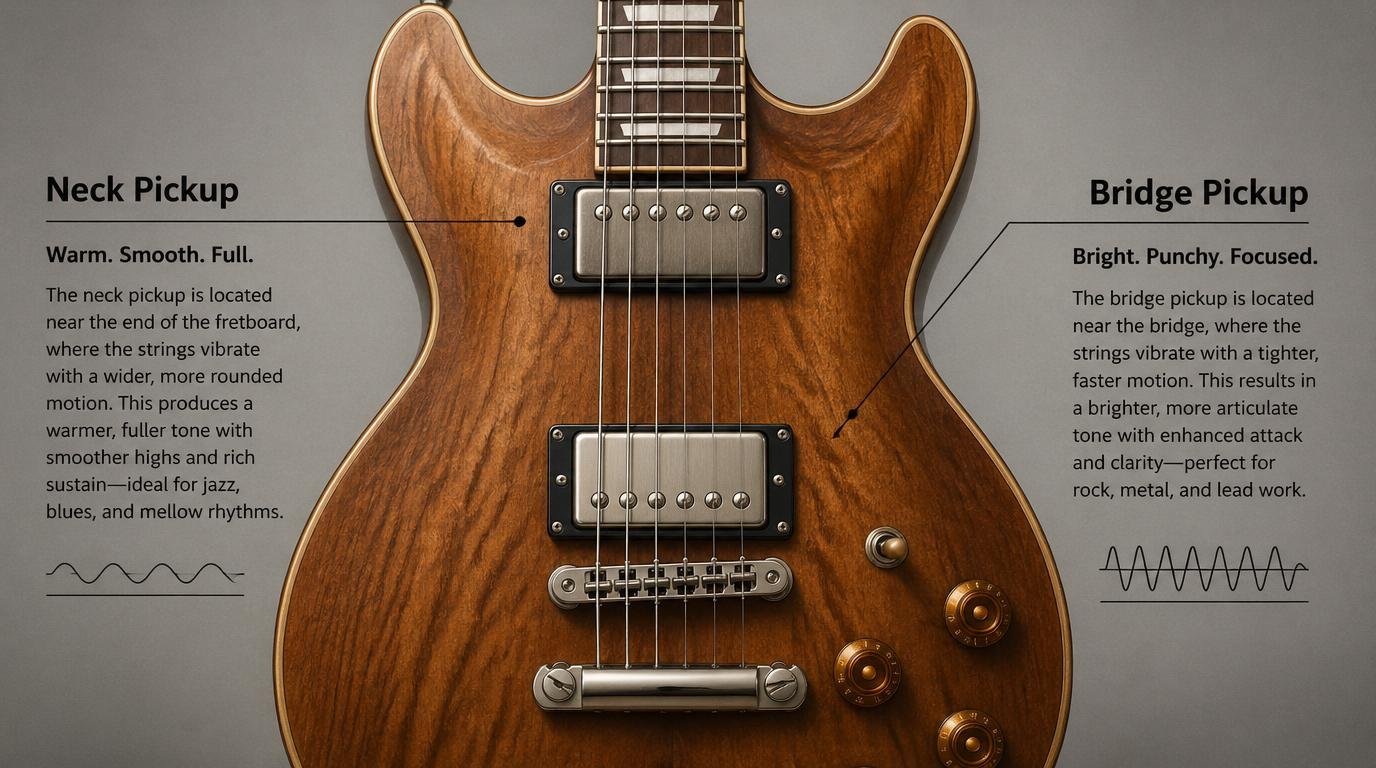
Understanding the Differences Between Neck and Bridge Pickups on Guitars
Guitars can have a variety of pickup configurations, but most commonly, they feature either two or three pickups. Each setup includes a neck pickup located closer to the fretboard and a bridge pickup situated near the guitar’s tailpiece. While their placement is crucial, it’s the distinction in sound and purpose that separates these two types of pickups. In this article, we’ll dive deep into the attributes of neck and bridge pickups, their applications, and when to choose one over the other.
Neck Pickup vs Bridge Pickup
Before we explore the differences between neck pickups and bridge pickups, let’s take a look at each position to appreciate their unique characteristics.
The Neck Pickup
Named for its position, the neck pickup sits closer to the guitar’s neck. This proximity dramatically influences its tonal qualities. Typically, neck pickups tend to sound softer, warmer, and more robust compared to their bridge counterparts. Due to their position, they can pick up the fuller vibrations of the strings, resulting in a higher output volume.

This pickup excels in capturing low-end frequencies and provides a smooth sound, making it ideal for achieving a rich, melodic tone. Therefore, if you prefer a rounder sound with more depth, the neck pickup may be your best bet.
The Bridge Pickup
In contrast, the bridge pickup is placed near the tail end of the guitar body. Its location means it captures a different range of frequencies, often resulting in a crisper, brighter sound. While bridge pickups generally produce a quieter output compared to neck pickups, they offer unique advantages in tone control and versatility.
Manufacturers frequently design bridge pickups to complement heavier effects and high-gain settings, which makes them a favorite among rock and metal guitarists.
This post contains affiliate links. If you make a purchase through my links, I may receive a small commission at no additional cost to you. I only recommend products I truly believe in.
Key Differences Between Bridge and Neck Pickups
At their core, neck and bridge pickups are designed to convert string vibrations into electrical signals, but the sound they produce diverges significantly. Neck pickups are known for their warmth and higher volume, while bridge pickups provide a sharper, punchy tone. This difference has direct implications for various musical styles.
Neck pickups typically excel in clean settings and lead guitar parts, allowing melodies to project seamlessly. Meanwhile, bridge pickups serve as the foundation for rhythm sections, often used to create driving, powerful riffs. The tonal range and output are thus essential aspects in choosing which pickup to use for a specific style or song.
Similarities Between Neck and Bridge Pickups
Despite their differences, neck and bridge pickups share core functionalities. Both types convert the vibrations of the strings into electrical signals, which are then turned into sound through an amplifier. Visually, they may appear identical or even be produced using the same materials; however, subtle distinctions in design lead to their varied tonal outputs.

Musicians often experiment with different types of pickups from various manufacturers. This can lead to unique sounds, as each brand has its special approach to crafting pickups tailored for specific musical expressions.
Advantages of the Neck Pickup
The neck pickup provides several distinct advantages that make it a favorite among various guitarists. Its warmer, fuller sound can cut through a mix easily, making it a powerful choice for leads or solos. This pickup allows for greater expressiveness, especially in styles requiring melodic intricacies.
If you’re performing with a less robust amplifier or a limited range of effects pedals, the neck pickup offers a significant advantage thanks to its higher output. This feature can make a world of difference in ensuring your sound doesn’t get lost in a band setting.
Additionally, the neck pickup shines in clean tones. Its ability to handle reverb and other effects at higher levels of clarity can elevate a guitarist’s performance, especially in genres like jazz or soft rock.
Advantages of the Bridge Pickup
The bridge pickup is like the Swiss Army knife of guitar pickups. While it may not boast the same level of warmth as the neck pickup, it shines in versatility. Because it doesn’t emphasize any particular frequency range, it can serve various styles with ease.
One significant advantage of the bridge pickup is its compatibility with multiple effect pedals. If you’re experimenting with overdrive, fuzz, or distortion, the bridge pickup can provide the clarity needed to maintain a defined sound without becoming muddy or indistinct. Its neutral sonic profile allows guitarists to paint their tonal palette freely.
The bridge pickup also excels in playing rhythm parts, particularly when employing high-gain settings or aggressive dynamics. The punchy sound from this position helps to drive a song’s energy while maintaining a clear melodic foundation.
When to Use the Neck Pickup
Neck pickups are often the go-to choice for solos, providing the fullness needed to cut through other instruments in a mix. Their rich tonal qualities work exceptionally well for clean passages and melodic playing.
If you’re creating distinct arpeggiated parts, the neck pickup is an excellent option to highlight the intricacies of your playing. Additionally, when lead sections require a bit more presence, switching to the neck pickup can result in a more powerful performance.
However, it’s essential to gauge the context. If your song involves high-gain sections, be mindful that the neck pickup may sometimes produce an overwhelming sound, potentially leading to audio distortion. When crafting sounds with considerable overdrive, you may want to explore modulating your effects to balance the dynamic range.
When to Use the Bridge Pickup
The bridge pickup is often looked at as an all-around performer. While it might not shine in every aspect, it provides an excellent balance for rhythm plays and high-energy performances. Guitarists frequently use this pickup for downtuned riffs and when crafting heavier sounds, ensuring the guitar occupies a solid place in the overall mix.
If you’re working with a single guitar in a band and need to assert your presence amid a full ensemble, the bridge pickup is a wise choice. Its slightly quieter tone might necessitate cranking up your amp, but it ensures that your sound remains articulate, even when competing against drums and bass.
Lastly, when combining both pickups, you can create rich, multi-layered sounds that incorporate the strengths of each. This dual-use can be an excellent way to maximize tonal variety during performances.
Bridge Pickup vs Neck Pickup: Final Thoughts
When it comes to selecting between neck and bridge pickups, the most significant distinction lies in their tonal characteristics. If both pickups are of the same type, you’ll still find that the placement will lead to tonal variations. The neck pickup, positioned closer to the strings’ vibrating points, will typically yield a louder, more vibrant sound ideal for solos, while the bridge pickup provides a broader sonic range, suitable for diverse effects.
In summary, understanding the characteristics of each pickup can empower you to make informed decisions on your guitar’s sound. Whether you lean toward the warmth of the neck for lead parts or the punch of the bridge for rhythm, mastering these tonal capabilities can significantly enhance your musical expression.