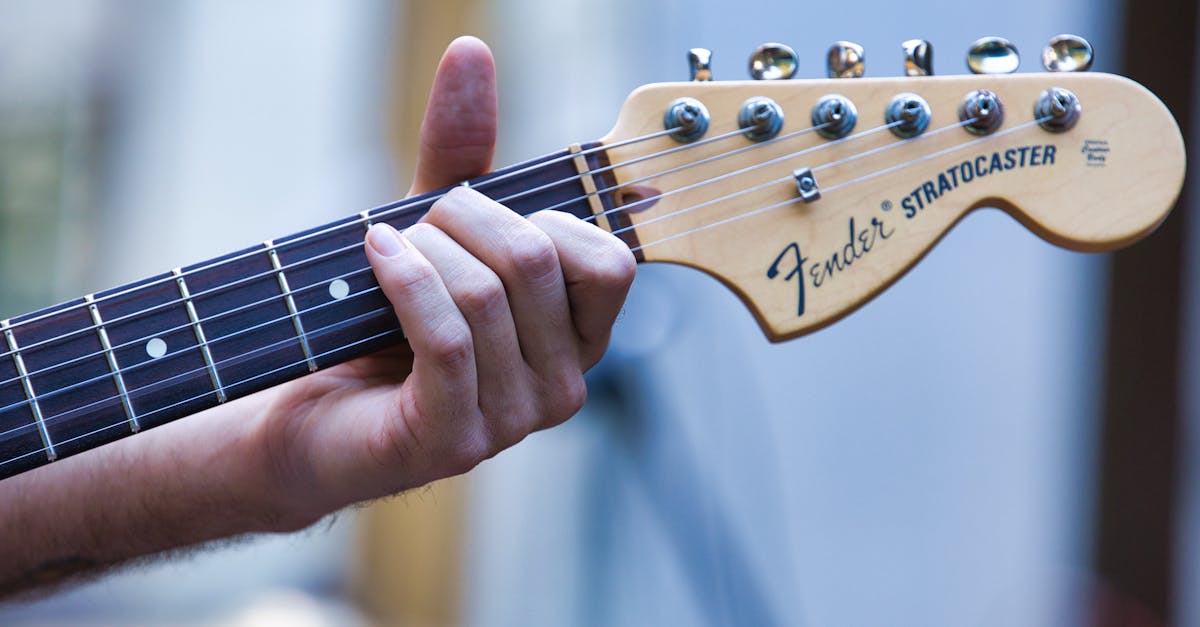
Unlocking Your Guitar Potential: Essential Finger Exercises
Every guitarist can relate to the struggle of navigating their instrument with clumsy or weak fingers. Even the most seasoned musicians faced this hurdle at some point. The good news? With focused finger exercises, you can enhance your dexterity and control over time. Let’s dive into some effective finger exercises that will help strengthen your abilities and improve your overall guitar playing.
The Importance of Finger Exercises
Learning guitar involves dedication, patience, and practice. Many aspiring players experience frustrations when their fingers do not respond as quickly as they would like. Remember, everyone faces challenges, but consistency and perseverance pay off.
A Journey of Growth
Set realistic expectations for yourself. It’s natural for fingers to feel uncooperative initially, but with time and the right exercises, improvement is inevitable. Let’s explore a variety of finger exercises designed to build strength, dexterity, and coordination.
This post contains affiliate links. If you make a purchase through my links, I may receive a small commission at no additional cost to you. I only recommend products I truly believe in.
Finger Exercises for Guitar
All-Encompassing Chromatic Scale Exercise
Beginning with the chromatic scale allows you to work on finger placement without overwhelming yourself with too much information. This exercise focuses on notes that are one semitone apart. Here’s how you can practice this methodically:
Beginner Level
Start with a straightforward “1-2” pattern using your index and middle fingers. Fret the first four notes of each string.
Advanced Level
For a greater challenge, fret the first two notes on the E string, then the third and fourth on the A string, and continue this pattern across the strings.
Expert Level
Elevate your practice by playing the first two notes on the E string, followed by the third and fourth on the D string, then the fourth and fifth on the A string, and finally, the sixth and seventh on the G string. Return across the strings afterward.
Regardless of the level you choose to focus on, this exercise enhances hand-eye coordination and finger mobility, making it a fundamental tool for any guitarist looking to improve their skills.
Finger Strength & Tapping Exercise
Tapping is a fantastic technique that allows you to play notes without needing to fret them continuously. One common hurdle for beginners is relying solely on familiar fingers for tapping. When faced with faster pieces that require the use of underutilized fingers, such as the pinky, players often struggle.
To tackle this issue:
- Use the chromatic scale again, pressing the first four frets on the E string with your fretting hand.
- Once comfortable, begin mixing in your pinky by fretting the first three frets and tapping the fifth fret.
For the second part, start tapping the third fret of the A string with your index finger, following that with your middle and ring finger on the fourth and fifth frets respectively. Explore this pattern across all strings for comprehensive training.
Spider Chord Accuracy Fretting Exercise
Fretting accuracy is vital, especially when playing solos. If you notice sloppiness in your playing, this exercise can significantly enhance your precision.
The ‘Spider’ exercise consists of creating a pattern using your index finger on the first fret and your pinky on the fourth fret while sliding with your middle and ring fingers on the string above. Alternatively, create a staircase shape to ascend and descend in semitone intervals.
Middle Finger Accuracy
Begin by fretting the fifth fret of the E string with your index finger, the seventh fret with your ring finger, and the sixth fret of the A string with your middle finger.
Ring Finger Accuracy
Build a staircase shape on the E string, fretting the first fret with your index finger and the fourth fret with your ring finger. Ascend the strings, then return.
Little Finger Accuracy
Follow the same staircase pattern, substituting in your little finger for additional challenges.
These exercises focus on areas where you may feel less confident, ultimately enhancing your overall accuracy.
Finger Dexterity and Endurance Training
Achieving balanced finger strength across all digits is often a challenge for guitarists. Many players tend to rely on just two or three fingers, leaving the others underdeveloped.
Although specific exercises were mentioned, the core idea here is to focus on your weaker fingers:
- Use only your underused fingers in slower exercises.
- Start with the chromatic scale to gauge how quickly you experience fatigue.
- Explore simpler shapes across the fretboard, gradually introducing octaves to build strength.
Experiment with fretting the first fret of the E string with your middle finger and the third fret of the D string with your little finger to enhance endurance.
Fretting & Picking Hand Coordination Exercise
Synchronizing your fretting and picking hands is essential for fluid guitar playing. If you focus too much on one hand, it may impede the accuracy of the other.
Try integrating various shapes and strumming patterns into your routine for balanced practice. Here are a few methods:
- Play the same fret on each string with a single downstroke, ascending in order.
- Progress to two-note pairs on each string, executing downstrokes for the first note and upstrokes for the second.
- Incorporate three notes per string with differing strumming patterns, including alternating strokes.
The ultimate challenge is mixing the exercises: use chromatic, tapping, and spider patterns while alternating between upstrokes and downstrokes to boost coordination.
Guitar Finger Exercises: Final Thoughts
Mastering the guitar is a journey that demands dedication and a variety of targeted practices. Exercises focusing on strength, dexterity, and coordination can make a significant difference in your playing ability.
From the foundational chromatic scale to the more intricate spider chords, every exercise crafted here serves a unique purpose in refining your skills. Prioritize your well-being by allowing sufficient rest to avoid injury. Remember, frequent shorter practice sessions are far more effective than occasional extended ones.
Embrace the process. As you invest time and effort into these exercises, your confidence and technique will evolve, translating your musical ideas into reality. Stay patient, and let your passion for guitar drive you forward. With determination, you’ll unlock your full potential on this versatile instrument!