Baritone Guitar vs Standard Guitar: A Comprehensive Guide
When it comes to guitars, many people may struggle to distinguish a baritone from a regular guitar. At first glance—or even during a casual jam session—these instruments might seem quite similar. However, a deeper dive reveals some significant differences that cater to particular styles and musical preferences. So, what sets a baritone guitar apart from a conventional guitar? Read on as we unpack their distinctions, advantages, and who should consider each option.
Table of Contents
- Understanding Baritone Guitars
1.1 The Unique Design of Baritone Guitars
1.2 Familiarizing with Standard Guitars - Key Differences Between Baritone and Standard Guitars
- Similarities Shared by Both Types
- Advantages of Baritone Guitars
- Benefits of Standard Guitars
- Who Should Consider a Baritone Guitar?
- Ideal Candidates for Standard Guitars
- Final Thoughts
Understanding Baritone Guitars
The Unique Design of Baritone Guitars
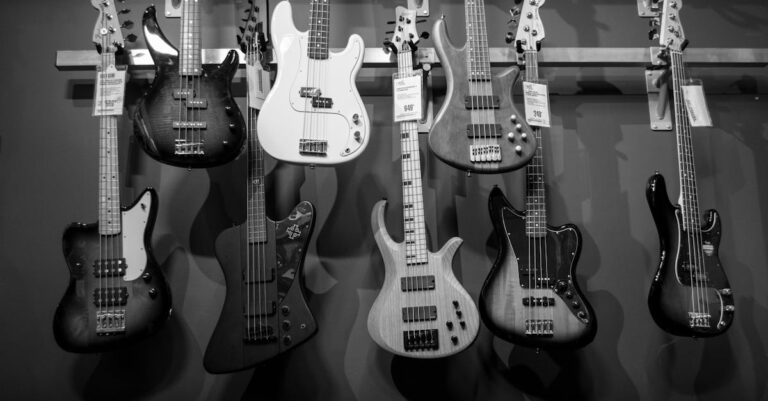
Imagine walking into a bustling music shop filled with countless guitars. Among them, a smaller selection stands taller and broader—these are likely baritone guitars. Characterized by their extended scale lengths, usually ranging from 26.5 to 30.5 inches, these instruments feature a deeper tuning, typically set at B Standard. This means that baritone guitars are tuned lower than standard six-string guitars, utilizing thicker strings that produce a richer tonal quality.
Despite the size and tuning differences, baritones are distinct from bass guitars, which boast even lower tones and a fundamentally different design. Borrowing their warm tonal characteristics, baritone guitars serve as a versatile middle ground, offering a unique sound that appeals to various genres.
This post contains affiliate links. If you make a purchase through my links, I may receive a small commission at no additional cost to you. I only recommend products I truly believe in.
Familiarizing with Standard Guitars
Standard guitars are the classic instruments most of us think of when we picture a guitar. Typically compact—with a scale length of around 25.5 inches and full-body dimensions of approximately 38 inches—they feature moderate spacing on the fretboard, making them familiar to play for most musicians. While the definition of a “normal guitar” can fluctuate due to an explosion in diverse models, a standard guitar generally refers to any conventional design that meets these criteria.
With countless variations and designs, these guitars provide comfort and familiarity, making them a go-to choice for many players. Whether you’re strumming chords or playing intricate solos, a standard guitar excels in versatility.
Key Differences Between Baritone and Standard Guitars
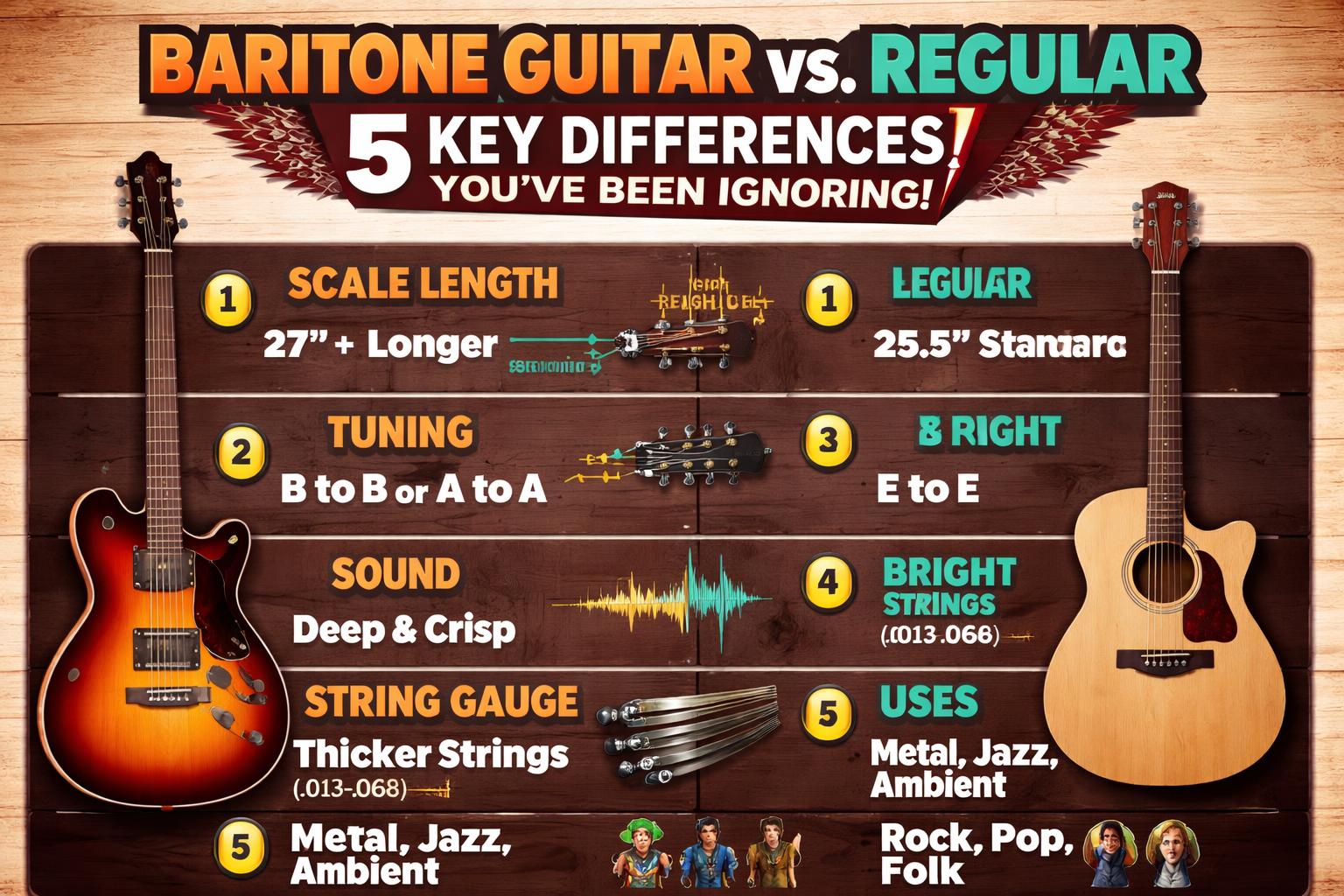
The most significant distinction between a baritone and a standard guitar lies in their size and scale length. Baritone guitars are generally larger overall, both in dimensions and weight. Their extended scale, often exceeding 28 inches, stands in contrast to the standard guitar’s length of around 25.5 inches.
This increased length not only affects physicality but also influences string tension. In practical terms, this means that baritone guitars utilize heavy-gauge strings that yield a warmer and fuller sound. While wood selections and construction quality also contribute to overall tone, baritones inherently produce a sound leaning toward the warmer end of the spectrum.
Similarities Shared by Both Types
Despite their differences, baritone and standard guitars share common characteristics that link them as guitar family members. Both types generally possess six strings, an almost identical body shape, and can be available in acoustic or electric formats.
For beginners, the subtleties in sound may not be immediately apparent, allowing you to enjoy playing without worrying about these distinctions. In practice, anything you can play on a standard guitar, you can also reproduce on a baritone guitar.
Advantages of Baritone Guitars

Baritone guitars bring several notable advantages to the table, particularly for specific musical genres. One of their primary strengths is the ability to handle dropped tunings with ease. Tuned at Standard B, baritone guitars resonate with a deep richness that particularly favors heavier music styles like metal and hard rock.
Prominent bands such as Metallica, Dream Theater, and Korn have embraced the baritone for its ability to deliver a unique depth that complements their sonic landscape. Additionally, the wider fret spacing on baritone guitars makes them ideal for guitarists with larger hands, enhancing comfort while playing complex chords.
Benefits of Standard Guitars
When comparing versatility, standard guitars take the crown. Their adaptability means that they can cater to nearly any style—from rock to blues, pop to jazz—allowing you to shape and craft your sound with the help of effects and pedals.
Because they typically tune to Standard E, standard guitars offer flexibility in choosing alternative tunings, granting musicians even greater freedom in their creative expression. Whether you’re a novice just starting out or a seasoned pro, owning a standard guitar broadens your stylistic options and ensures you have a reliable instrument at your fingertips.
Who Should Consider a Baritone Guitar?
Baritone guitars are a fantastic choice for those in search of a distinctive, rich sound. If your playing style gravitates toward heavier genres, or you simply desire a fuller tonal palette, you may find yourself leaning towards a baritone.
These guitars are also suitable for players with larger hands, as the fret spacing accommodates wider intervals for comfortable playing. However, if you are a beginner, keep in mind that baritones may initially present some challenges in executing complex chords, requiring some adjustment.
Ideal Candidates for Standard Guitars
Nearly every guitarist can benefit from owning a standard guitar. Their balanced design and innate versatility make them an excellent option for a wide range of applications. Whether you’re just taking your first steps in music, or you’re looking to record or perform, a standard guitar serves as a reliable backbone for your musical journey.
In music education, standard guitars are standardized instruments, introducing many students to the basics of guitar playing. Due to their broad appeal, they are well-suited for live performances and studio work alike.
Final Thoughts
At first glance, baritone guitars and standard guitars may appear to be cut from the same cloth, but key differences set them apart. While the size and scale length of a baritone guitar lead to a unique tonal quality that appeals to specific musical preferences, standard guitars offer a balanced and versatile instrument suitable for a variety of styles.
If you’re contemplating your first guitar purchase, it’s essential to consider your musical aspirations. If you’re drawn to lower tunings and a warmer sound, a baritone guitar may be your ideal match. On the other hand, if you’re looking for an all-purpose instrument that can adapt to various styles, go for a standard guitar.
In the end, many guitarists find that both types add rich layers to their musical expressions. As you develop your skills and musical voice, acquiring a baritone guitar later on can expand your sonic possibilities even further. Start your journey today, and discover the joy of making music with the instrument that’s right for you.