Baritone Guitar vs Bass Guitar: Understanding the Differences
When it comes to stringed instruments, the baritone guitar and bass guitar both offer deeper and lower sounds compared to standard guitars. However, they serve distinct roles and functions in the world of music. If you’re pondering the intricacies of these two fascinating instruments, you’ve landed in the right place. In this article, we’ll explore their similarities, differences, advantages, and help you decide which one might be the best fit for your musical journey.
Baritone Guitar Explained
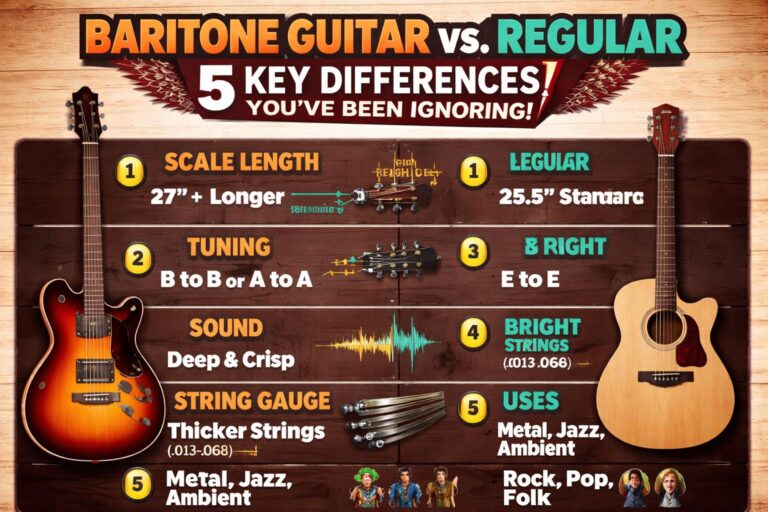
The baritone guitar is an instrument that closely resembles a standard guitar, sharing essential components such as the body, neck, headstock, nut, and strings. What sets it apart is its notably longer neck and greater scale length, which means the strings are tuned lower, typically to B Standard. Baritone guitars are versatile, available in both acoustic and electric styles, and can boast anywhere from 6 to 12 strings.
One defining feature of a baritone guitar is its larger body, especially in the acoustic variants. This contributes to a richer, fuller sound, making it ideal for genres that emphasize depth and resonance. Electric baritone guitars also maintain a significant volume level, allowing for creative use of various guitar effects.
The Low-Down on Bass Guitars
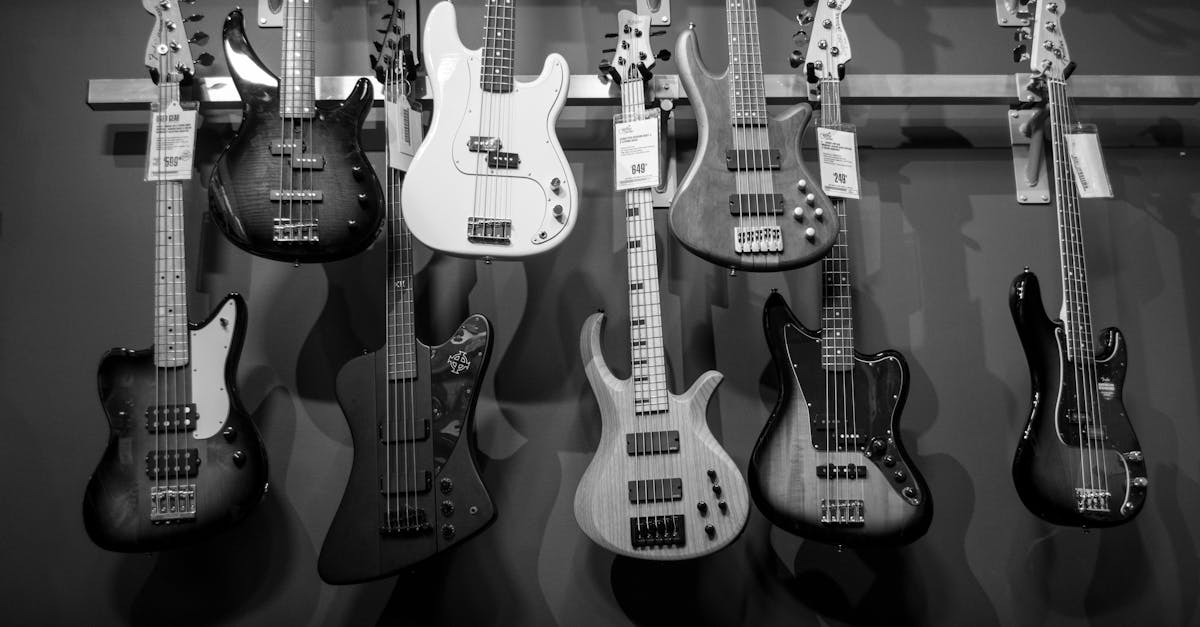
In contrast, the bass guitar typically serves as the backbone of a band, focusing primarily on rhythm. Usually featuring four heavy-gauge strings, bass guitars can be fretted, fretless, acoustic, or electric. Their standard tuning is E-A-D-G, similar to traditional guitars but excluding the higher two strings.
Bass guitars tend to have longer necks than both standard and baritone guitars, often exceeding 34 inches. While most bassists play to support the harmony of the music, some skilled musicians—like Flea from Red Hot Chili Peppers or Geddy Lee from Rush—utilize it to create melodic lines. Additionally, bass guitars aren’t limited to four strings; many models come with 5, 6, or even more strings to cater to various musical styles.
Key Differences Between Baritone Guitars and Bass Guitars
The most apparent distinction between a baritone guitar and a bass guitar lies in their tuning. Baritone guitars usually tune to B Standard, while bass guitars adhere to E Standard tuning. This key difference accounts for their divergent sound profiles.
Furthermore, baritone guitars generally have 6 strings, while bass guitars typically come with 4. This means that when you’re playing a baritone guitar, you’re diving deeply into lower frequencies often associated with a bass guitar.
Next, let’s talk about scale length. On average, baritone guitars have a scale length of around 27 inches, sometimes extending up to 30.5 inches. In stark contrast, bass guitars usually start at a substantial 34 inches. When it comes to string thickness, baritone guitar strings are indeed thicker than those of a standard guitar but are still thinner than the heavy-gauge strings found on bass guitars.
Similarities Between Bass and Baritone Guitars
Despite their many differences, baritone guitars and bass guitars share some similarities. For starters, you can play both using a pick or fingerstyle technique. As you venture into the realm of string thickness and playability, you’ll find that baritone guitars and bass guitars require similar adjustments and techniques, making them equally approachable for beginners.
Another similarity is the fret width. Both instruments typically feature wider frets, easing the playability factor for certain chords and riffs. However, this can complicate techniques like shredding, making it a shared challenge for both types of guitars.

The tonal quality of baritone guitars aligns closely with that of bass guitars. Their sounds are characterized by a dark, deep timbre with a focus on low frequencies, making them appealing for genres that lean heavily into bass lines.
Advantages of Baritone Guitars
A key advantage of baritone guitars is their ability to maintain tunings lower than standard E without compromising sound quality. This aspect makes them a go-to choice for genres that rely on deeper tones, such as hard rock and metal.
Learning the baritone guitar can be less daunting for those already familiar with standard guitars, as it shares many features with them. This can shorten the learning curve, especially for novice players. Additionally, the baritone’s design allows for creative exploration in terms of effects and tonal variations.
Advantages of Bass Guitars
The bass guitar stands out in its own right, excelling at producing low-end frequencies that no regular guitar can match. With its thicker strings and wider frets, many argue that playing the basics on a bass is even more straightforward than on a guitar.
Bassists can also explore various playing techniques, such as slapping and popping, which are rarely found in conventional guitar playing—unless you’re particularly skilled. For newcomers, the bass tends to be more forgiving due to its fewer strings, making it easier to learn the core functions of music without becoming overwhelmed.
Reasons to Choose a Baritone Guitar
If you’re captivated by the baritone’s unique charm, there are plenty of reasons to opt for one. Baritone guitars shine brightly with their ease of play, especially for beginners, as their wider frets can make pressing down the strings less strenuous. They excel in genres needing dropped tunings, providing a tonally warm and full-bodied sound.
However, it’s worth mentioning that baritone guitars might not fit every musical need. They tend to lack versatility in genres like pop or R&B, where other instruments excel. This specificity can limit the baritone guitarist’s choices.
Reasons to Pick a Bass Guitar
Choosing a bass guitar is often less about personal preference and more about necessity in a musical setting. Bass guitars are foundational instruments in various band settings, fulfilling crucial roles that enhance rhythm and groove. If you are more drawn to rhythm and the overall groove of music, the bass guitar is likely your best match.
Incorporate a bass into your musical toolkit, and you’re setting yourself up to enhance compositions and jam sessions. Beginners can find a lot of helpful resources on the best bass guitars to get started.
Understanding the Fender Bass VI
The Fender Bass VI often draws comparisons to baritone guitars, yet they are distinct instruments. The Bass VI features a shorter scale length of about 27 inches, placing it between the standard lengths of both guitars. Though it has six strings similar to a baritone guitar, it serves a different purpose—functioning as a bass by utilizing guitar strings.
While both instruments are valuable, they are not interchangeable. The Bass VI is tuned to E, similar to standard bass guitars, while baritone guitars typically employ lower tunings like B Standard.
Concluding Thoughts on Baritone Guitar vs Bass Guitar
When you weigh the baritone guitar against the bass guitar, the most noticeable similarity is the lower tone they both produce. However, their unique functions and timbres offer distinct contributions to musical compositions. Mixing a baritone guitar, bass guitar, and standard guitar within a band can create a rich sonic landscape—provided that you pay attention to the balance and mixing.
Ultimately, the choice between a baritone guitar and a bass comes down to what role you’d like to play in your musical endeavors. If you’re keen on rhythm and groove, the bass guitar is a compelling choice. But if deep tones and unique tonal qualities are calling your name, then the baritone guitar could be your instrument of choice.
This post contains affiliate links. If you make a purchase through my links, I may receive a small commission at no additional cost to you. I only recommend products I truly believe in.
Choosing either instrument opens the door to a wealth of creative possibilities. So whether you’re strumming a baritone or laying down bass lines, enjoy the journey of musical exploration. There’s a whole world waiting for you, rich with sounds and experiences. Each string you pluck brings a new opportunity to express yourself, so dive in and let your sound reverberate!