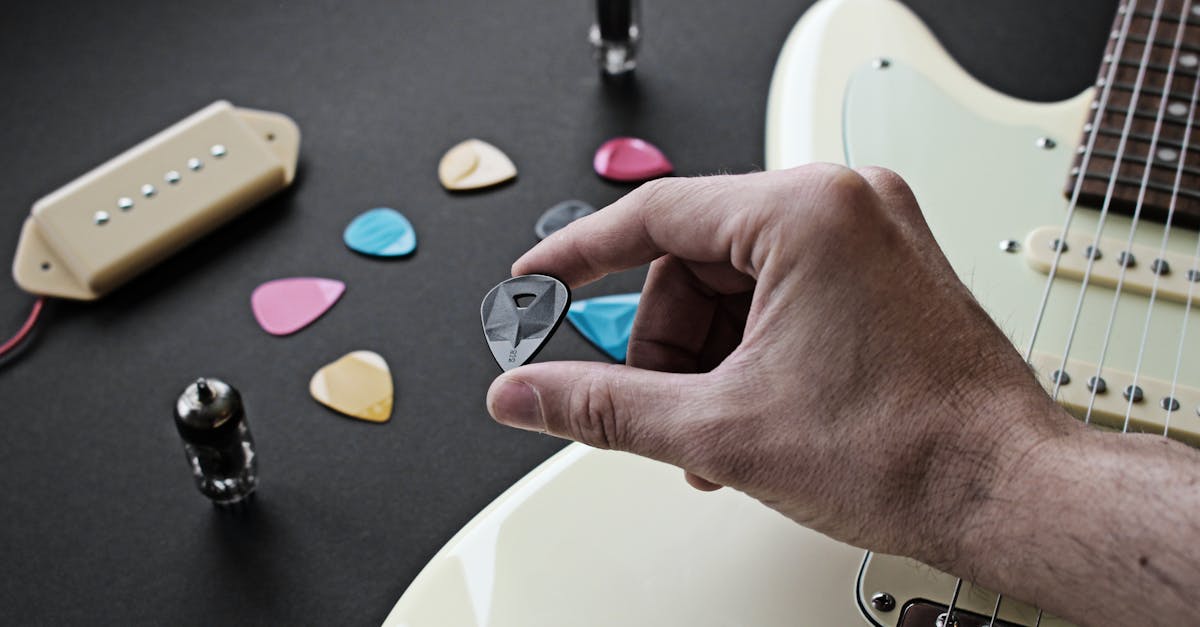
I’ve misplaced countless guitar picks over the last decade! Despite my efforts to keep several spares handy, I still find myself running out when I need them most. During those moments, I often rely on alternative options. You might wonder, what can I use as a guitar pick that still delivers a similar sound and feel? The reality is that no substitute will give you the exact experience of a traditional pick. However, that doesn’t mean they’re ineffective. In fact, exploring different sounds and materials can spark your creativity in unexpected ways. In this article, I’ll share some effective alternatives to guitar picks for those times when you can’t find one.
Table of Contents
- What Can I Use As A Guitar Pick?
- 1.1 Fingers
- 1.2 Coins
- 1.3 Bottle Caps
- 1.4 Thin Wood Scraps
- 1.5 Pens
- 1.6 Old CDs and DVDs
- Final Thoughts on Guitar Pick Alternatives
What Can I Use As A Guitar Pick?
A variety of everyday items can step in when you don’t have a traditional guitar pick on hand. Metal coins, bottle caps, discarded DVDs, and even plastic rulers can suffice. While you could technically use these items without any modification, even the least expensive guitar picks are preferable. With a little DIY spirit and creativity, you can create your own picks using cardboard or thin wood shavings. However, keep in mind that using metal as a pick is not the best idea since it can damage your guitar strings.
The most effective alternative to a guitar pick is arguably your own fingers. Whether you’re strumming chords, playing individual notes, or engaging in rapid picking, your fingers can handle it all. Still, not every guitarist enjoys fingerstyle, and sometimes, you just can’t find a pick when you need it. Every guitarist has likely experienced the aggravation of losing a pick at a crucial moment. The tiny size makes them easy to misplace, and if you don’t have spare picks handy or can’t buy new ones quickly, you might wonder what else you can use to strum your guitar.
Over the past ten years, I’ve experimented with nearly every item in reach when I found myself without a pick. Coins, SIM cards, bottle caps, cigarette lighters, pens, and broken plastics have all made the cut. While each item worked in a pinch, they never provided the same sound or feel as a traditional pick. Nevertheless, if you’re in a bind or eager to experiment, let’s look at some alternatives and what to expect from each.
Fingers
Fingerstyle guitar is a technique that relies solely on the fingers. You can effectively pluck, strum, or pull the strings just as you would with a pick. For those who are willing to adapt, your index finger and thumb can create a pinching motion, providing a natural picking experience. This closest approximation to a traditional pick might prove beneficial in your playing.
However, mastering fingerstyle can be challenging, especially for beginners. It may even cause discomfort initially. Despite this, learning fingerpicking basics liberates you from reliance on external tools, allowing for a more intimate connection with your instrument. Many accomplished musicians, like Lindsey Buckingham of Fleetwood Mac, have showcased the art of fingerstyle playing.
Coins
When you’re in a tight spot, small metal coins can serve as a temporary solution. However, they shouldn’t be viewed as a long-term option. The engravings on coins can create additional friction, leading to difficulty in maintaining a consistent tempo when playing. Moreover, metal is harsher on guitar strings than standard picks, resulting in quicker wear and tear.
That said, coins do come with certain advantages. Their weight provides easier control compared to lighter household items. Some guitarists even appreciate the unique metallic ring that coins add to their tone, although it may negatively affect your sound quality. Additionally, the benefit of using a coin is that it won’t break under stress during play, unlike typical picks. Keep in mind that altering the coin for a better shape could mean losing its value as currency later.
Bottle Caps
Plastic bottle caps offer another handy alternative to traditional picks. They’re about the same size as coins, but they’re typically flimsier. That said, they can withstand quite a bit of use before they begin to wear down. A major drawback is that their lightness can make them tricky to control when you’re picking, and the technique for holding and strumming may take some adjustment.
On the bright side, using bottle caps won’t damage your guitar strings. Since they’re plastic, you can easily modify them. If they have rough edges, a little sanding can help smooth them out, making them easier to use.
Thin Wood Scraps
As a former skateboarder, I often broke boards and collected the scraps, which I later discovered could be transformed into guitar picks. Shaping small wooden pieces into picks is straightforward. Use sandpaper to smooth out the ends you’ll grip, ensuring you don’t have any sharp edges that could splinter during play. If you’re utilizing heavy-gauge strings, thinner wooden pieces should hold up well under pressure.
This alternative offers a warm, natural sound that many players might appreciate, making it a viable option in a pinch.
Pens
While not an ideal solution, you can use a pen as a makeshift guitar pick. Its unwieldy structure may present challenges, but the pointed end can effectively strike the strings if held properly. The gripping base of the pen can offer comfort, and you might find a sweet spot by adjusting your wrist’s angle.
However, using a pen requires some trial and error, especially when trying to keep it off the guitar’s body while you’re playing. Fast picking techniques might not be feasible with a pen, but it can still offer a decent alternative if you don’t want to risk damaging your strings with a coin or if you lack other options.
Old CDs and DVDs
Although CDs and DVDs are largely obsolete in the modern music landscape, they can serve as a makeshift pick if you have any lying around. The downside is their larger size compared to regular picks, which can complicate your finger positioning. To use these effectively, you might need to cut the discs into smaller shapes resembling a traditional pick.
After discovering this suggestion, I opted for a broken CD that was headed for the trash. When you snap a CD, it rarely breaks into even shapes, so you’ll need to choose the best parts for your purposes. Smoothing out edges with grip tape can produce a usable tool for your playing needs.
Final Thoughts on Guitar Pick Alternatives
In summary, you can creatively utilize many alternative items as a substitute for guitar picks. Although they may not fully replicate the experience of a traditional pick, they can be useful in a pinch. The alternatives mentioned above have proven reliable in my experience, but they are by no means exhaustive. There might be other creative solutions out there waiting to be discovered.
If you know of any innovative alternatives or have had your own experiences, feel free to share them in the comments. While no substitute can completely replace the quality of a standard pick, using these alternatives could lead you on a memorable journey of experimentation and exploration in your guitar playing. And if you’re particularly into fast-paced shredding, don’t forget to stock up on plenty of spare picks for those high-energy moments!