Mastering Guitar Slides: A Comprehensive Guide
Guitar slides can produce enchanting sounds, but only if wielded by a skilled guitarist. If you are new to using a slide, don’t worry—this guide will help you navigate the nuances of mastering this technique. With dedication and practice, you can unlock the magic of the slide-guitar sound.
Table of Contents
- How To Use A Guitar Slide
1.1 Understanding Slide Technique
1.2 Essential Tips for Slide Guitar
1.3 Choosing the Right Slide
1.4 Slide Position and Hand Techniques
1.5 Muting Unwanted Strings
1.6 Picking or Fingerstyle
1.7 Setting String Action - Final Thoughts on Using a Guitar Slide
How To Use A Guitar Slide
While playing with a guitar slide might seem straightforward, it introduces various technical and musical challenges. To effectively use a slide, you need to grasp how it works and its impact on your playing style.
Understanding Slide Technique
Playing with a slide might not look as flashy as advanced shredding techniques, but it is deceptively complex. When you use a slide, you tap into the guitar’s unexploited potential, moving beyond the conventional 12-note system found in each octave. This gives you access to a richer array of pitches and sounds. Essentially, using a slide transforms your guitar into a fretless instrument, enabling true glissando and vibrato effects.
Although slide guitar is often associated with blues music, it is versatile enough for numerous genres. The “bottleneck” slide technique shines primarily in lead playing, but it can also effectively complement chord progressions in certain contexts.
Essential Tips for Slide Guitar
Before diving deep into slide techniques, remember that while it provides new tonal possibilities, it also presents challenges. The guitar’s usual 12-note framework expands when you introduce a slide, allowing for pitches between the standard notes. This can result in beautiful sounds but may also complicate pitch accuracy.
One of the significant challenges that slide guitarists face is controlling string resonance. You need to manage how other strings ring out while you play. It’s crucial that when you play a note, your slide’s placement is right above the fret—this differs from traditional playing where you press down on the string between two frets.
This post contains affiliate links. If you make a purchase through my links, I may receive a small commission at no additional cost to you. I only recommend products I truly believe in.
Choosing the Right Slide
Slides come in various materials and sizes, including brass, glass, and ceramic options. Most slides are designed to fit over an entire finger, but you can find shorter varieties that cover only part of the finger. When getting started, a standard brass slide is a solid choice.
Material impacts tone: brass tends to offer a brighter sound than glass and can provide better note sustain. Choosing the right slide enhances not just comfort but also your overall playing experience.
Slide Position and Hand Techniques
While many guitarists prefer to wear the slide on their ring finger, it can also be held on the middle or pinky finger. Avoid placing it on your index finger, as this limits your ability to fret normally with that finger.

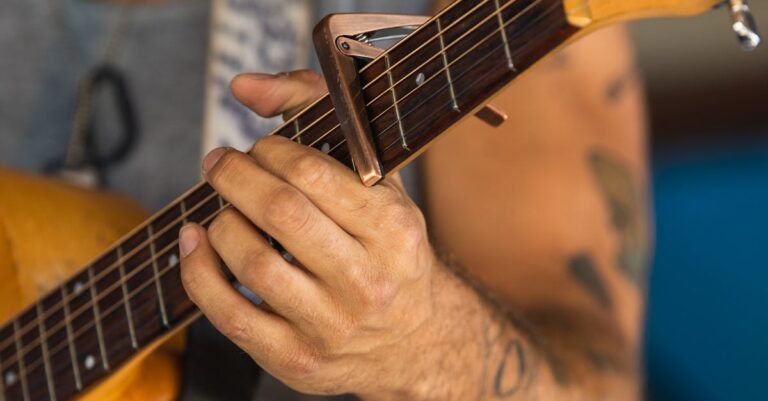
Your fretting hand should be relaxed, with fingers pointing up and parallel to the frets. The thumb naturally rests along the neck’s central axis. Unlike traditional playing, avoid applying too much pressure with your thumb; instead, maintain a light touch for stability.
Ensure the slide lightly touches the strings without pressing down. This allows the slide to act more like a moving fret, letting the strings resonate freely.
Muting Unwanted Strings
One critical skill in slide guitar is muting strings that are not intended to ring out. Without proper control, you’ll find that multiple strings resonate together, muddying your sound. To manage this, use your unoccupied fingers to dampen the strings beneath the slide.
If the slide is on your ring finger, your index and middle fingers can rest lightly on the strings to mute them without pressing down. As you shift around the fretboard, maintain contact with the strings to ensure they don’t ring out unless you’re playing them.
You can also employ palm muting with your picking hand, further clarifying your sound. It’s key to strike a balance between allowing some notes to resonate and stopping the others from ringing where they shouldn’t.
Picking or Fingerstyle
When it comes to playing slide guitar, one common question is whether to use a pick or to rely on fingerpicking techniques. Each method offers distinct advantages depending on your musical goals.
Typically, using a pick produces a brighter tone, while fingerpicking allows for more nuanced expression, including techniques like chicken picking. For beginners, starting with a pick may offer more immediate success, allowing notes to ring for easier coordination while learning to mute other strings.
Setting String Action
Adjusting your guitar’s action—how high the strings are above the fretboard—can make playing with a slide significantly easier. While lower action allows for easier pressing down of strings in standard playing, higher action helps in slide work by minimizing fret buzz and providing more room for the slide to glide across strings.
Final Thoughts on Using a Guitar Slide
Using a slide guitar opens doors to a world of musical possibilities. With its fretless quality, you’re no longer confined to a limited set of pitches. However, mastering the slide comes with its set of challenges. It’s essential to hone your technique while developing a keen ear for pitch nuances, as this skill will greatly affect your ability to create beautiful music.
Whether you’re playing blues, rock, or any other genre, incorporating a slide into your guitar work can transform your sound and add depth to your playing. With persistence, practice, and a solid understanding of these techniques, you’ll be on your way to becoming proficient at slide guitar. Now pick up that slide and let the music flow!