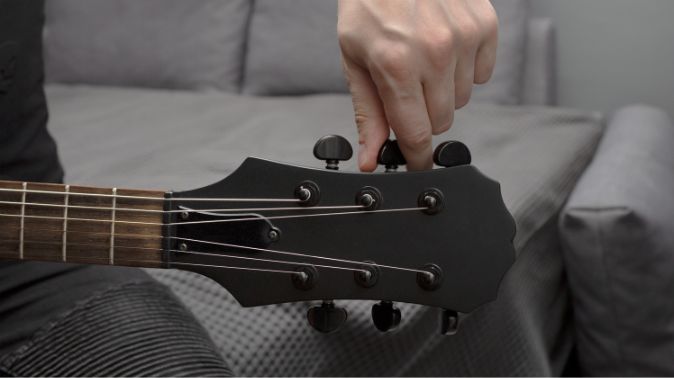
Baritone guitars closely resemble standard guitars, with the most notable distinction being their extended scale length. This longer scale results in a deeper tonal range, enabling musicians to explore lower frequencies. For those curious about the specifics of baritone guitars, our comprehensive guide titled “What Is A Baritone Guitar” delves into the details. In this article, we will focus specifically on how baritone guitar tuning differs from conventional guitar tuning. While the tuning method remains generally consistent, the actual notes to which the strings are tuned differ significantly.
Baritone guitars primarily offer two standard tunings alongside various alternative tunings. We will explore the standard tunings, as well as the most intriguing alternative options available.
Baritone Guitar Tuning: Understanding the Differences
Let’s kick things off with E standard tuning, which is prevalent for most standard guitars. By “standard” guitars, we refer to instruments that typically have a scale length ranging from 24 to 25.5 inches—these are what you most often see in shops and hear on recordings.
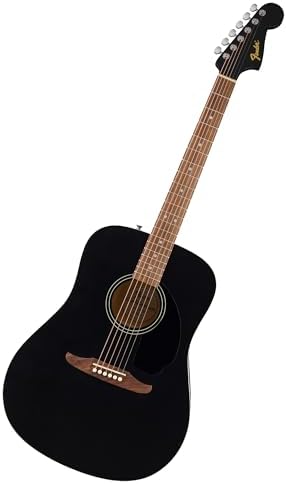
Strings in E standard tuning are arranged as follows, from the thinnest to the thickest string:
- e
- B
- G
- D
- A
- E (two octaves below the first string)
However, this is merely one method of tuning. Countless alternative tunings can also be utilized on a guitar. For instance, many intermediate guitarists often begin to experiment with drop D tuning, where the lowest E string is tuned down to D, achieving a unique resonance. Drop C is another commonly used tuning.
So, what defines the limits of tuning? The scale length—the distance from the nut to the saddle—plays a crucial role. Standard guitars simply lack the necessary length to maintain proper string tension at lower tunings. This is where baritone guitars shine, boasting a scale length between 27 and 30 inches that allows for much lower tunings.
The standard tuning for a baritone guitar is called B standard. Additionally, a popular alternative tuning is A standard, which is one full step lower than B. Beyond these, several alternate tunings—such as drop A, double drop A, A-E-A-D-E-A, and G-D-A-D-E-A—further expand tuning possibilities.
But what does this mean for you as a player? Baritone guitars, particularly when tuned to their standard settings, produce a distinctive sound. They can generate vibrant and twangy tones—perfect for surf rock—and also heavy and powerful sounds suited for metal genres. This versatility makes the baritone guitar a favorite among various musicians, including those in the country, jazz, and even cinematic score realms. The ability to dial down to lower notes opens up a wider range of sound for guitarists, adding a new tool to their musical toolkit without the need to master a completely different instrument.
Standard Baritone Guitar Tunings
Let’s take a closer look at the standard tunings used for baritone guitars, which are the most widely adopted by players.
B Standard
As previously mentioned, B standard is the primary tuning for baritone guitars. The strings are tuned in the following order, from the bottom to the top:
- B
- F#
- D
- A
- E
- B

In B standard tuning, every string is tuned two and a half steps lower than E standard tuning, effectively placing each string five notes lower than its standard counterpart. Notably, since the strings maintain their relative tuning, you can transpose common chord shapes from E standard directly to B standard.
For example, if you want to play a G major chord shape with the root note on the third fret of the lowest string, it will produce a D note instead of a G. Below is a table illustrating the transposition of common E standard chords to B standard.
| E Standard Chord | Transposed B Standard Chord |
|——————|——————————|
| A | E |
| A# | F |
| B | F# |
| C | G |
| C# | G# |
| D | A |
| D# | A# |
| E | B |
| F | C |
| F# | C# |
| G | D |
| G# | D# |
A Standard
The second standard tuning for baritone guitars is A standard, which is a full seven notes lower than E standard tuning, making it three and a half steps lower than B standard. The strings for A standard tuning are arranged as follows:
- A
- E
- C
- G
- D
- A
Similar to B and E standard tunings, the strings maintain their relative tunings, allowing players to transpose chord shapes effectively within this tuning.
Here’s how common E standard chords transposed to A standard appear:
| E Standard Chord | Transposed A Standard Chord |
|——————|——————————|
| A | D |
| A# | D# |
| B | E |
| C | F |
| C# | F# |
| D | G |
| D# | G# |
| E | A |
| F | A# |
| F# | B |
| G | C |
| G# | C# |
Alternative Baritone Guitar Tunings
In addition to standard tunings, baritone guitars are commonly played with several unique alternative tunings. Each of these tunings provides a different sonic experience.
Drop A
Drop A tuning resembles drop D tuning but is adapted for baritone guitars. To transition from B standard tuning to drop A, the sixth string is lowered from B to A. The resulting tuning for drop A comprises:
- B
- F#
- D
- A
- E
- A (an octave below the fourth string)
This tuning is frequently utilized in heavier music genres, allowing players to perform power chords with ease, as the sixth and fourth strings produce the same note in different octaves.
Double Drop A
Double drop A tuning can be likened to double drop D tuning used with standard guitars. To achieve this tuning, lower the lowest B string to A, similar to drop A. However, you also adjust the highest string, the B string, tuning it down to A, as well. The strings for double drop A are as follows:
- A
- F#
- D
- A
- E
- A
This unique tuning creates a deep, droning sound ideal for atmospheric and ethereal music, benefiting a multitude of genres.
A-E-A-D-E-A
This tuning provides a rich auditory experience akin to its higher-pitched counterpart, D-A-D-G-A-D. It’s favored among fingerstyle guitarists for producing emotive tones. The strings are tuned as follows:
- A
- E
- D
- A
- E
- A
The open tuning allows players to strum the strings without pressing down on the fretboard, creating a beautiful resonance.
G-D-A-D-E-A
Moreover, G-D-A-D-E-A tuning bears a striking resemblance to the previous tuning, differing only on the fifth and sixth strings. The tuning results in the following arrangement:
- G
- D
- A
- D
- E
- A
This open tuning also lends itself to creating diverse sounds, pushing the boundaries of what players can achieve with baritone guitars.
Tuning a Baritone Guitar
Materials Needed
Before you begin tuning your baritone guitar, ensure you have the following materials:
- A reliable guitar tuner
Method
If you have experience tuning a standard guitar, you’re already familiar with the process. The primary difference with a baritone guitar is that you will be tuning it down to a much lower pitch. Therefore, utilizing a guitar tuner is recommended for accurate results rather than relying solely on your ear.
Regardless of the type of tuner you use—whether it’s a clip-on, pedal, or tuning app—follow these steps:
- Power on your tuner.
- Pluck the sixth string and adjust the tuning pegs until the correct note is achieved.
- Repeat this process for each string.
As you tune your baritone guitar, remember that while you can initially tune relative to other strings, having the correct pitch for each string is crucial. Additionally, using strings designed explicitly for baritone instruments is advisable, as regular strings will not suffice.
Baritone Guitar Tuning: Final Thoughts
Like standard guitars, beginners learning the baritone guitar will typically want to start with standard tunings. However, as players refine their skills, experimenting with alternative tunings can foster creativity and open up new avenues for musical exploration. Dive into different tunings and savor the unique sounds they enable!