
How Many Strings Does a Guitar Have? A Comprehensive Guide
If you’re curious about the number of strings on a guitar, you might have been told to simply “count” them. However, the answer is not as straightforward as it seems. There are various types of guitars, each with its own string count, and the versatility of this instrument has led to a range of configurations. This article will explore the standard and alternative string numbers while discussing the pros and cons of each type.
The Standard Guitar String Count
Most guitars typically come with six strings. This six-string configuration has become synonymous with the instrument itself. However, this is just one of many possibilities. Guitar designers have tapped into their creativity to experiment with different string counts, resulting in a wide array of options.
For example, you’ve probably heard of the extreme variations that some musicians showcase. YouTube creators, like Jared Dines, have flaunted guitars with 18 strings, while Stevie T has taken it a step further with a remarkable 20-string guitar. You can catch both of them demonstrating their extraordinary instruments in a captivating video.
Why Six Strings? A Brief History
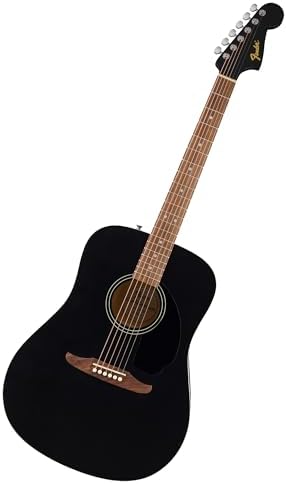
So why did six strings become the norm? The evolution of the guitar plays a significant role in this. The instrument’s history dates back to 16th-century Spain, where early guitars were often four-stringed. As the demand for more musical range grew, a fifth string was introduced, ultimately leading to six strings becoming the standard by the 1700s.
The design provided players with ample range and made it easier to form the numerous common chords, roughly totaling around 100 variations. In standard tuning, the strings are arranged as E A D G B E. As our understanding of music and guitar playing advanced, so did the emergence of various guitar types featuring different string configurations.
Other Popular String Configurations
While the six-string guitar rules the roost, there are other prominent variations worth mentioning.
The 12-String Guitar
The 12-string guitar is perhaps the second-most popular option. This variation consists of two sets of six strings, where the first set matches standard thickness, while the second set employs thinner strings. In standard tuning, the upper four strings (E A D G) are tuned one octave higher than their thicker counterparts, while the lower two strings maintain the same pitch. This design enriches the sound, offering a fuller auditory experience.
The 4-String Bass Guitar
The 4-string bass guitar, typically seen as the second-most common guitar variant, is designed for a deeper sound. With longer scales to accommodate thicker strings, these bass guitars offer a range that complements the musical spectrum nicely. Standard tuning for bass guitars is E A D G. However, they also explore other string configurations; for example, bassist Danny Hauser of progressive metal band Veil of Maya plays a 7-string bass guitar.
As technology in guitar design has progressed, there are also 12-string basses, which include two additional strings for each of the four standard bass strings, mirroring the 12-string guitar’s design.
The Rising Popularity of Extended-Range Guitars
Have you heard of 7-string, 8-string, or even 9-string guitars? Since the introduction of the first mass-produced 7-string guitar by Ibanez in 1990, designed in conjunction with guitar legend Steve Vai, these extended-range guitars have gained traction. They provide musicians with greater low-end range, as the added strings are heavier and pitched lower than the standard E string.

Here’s how they’re typically tuned:
- 7-string guitar: B E A D G B E
- 8-string guitar: F# B E A D G B E
- 9-string guitar: C# F# B E A D G B E
These guitars are particularly popular in metal genres, thanks to their ability to achieve heavier tones. Bands like Tool, Deftones, and Dream Theater often use these instruments to explore their musical capabilities.
Innovations in Guitar Design
The versatility of guitar designs does not end with just the number of strings. One exciting development is the advent of multiscale or fanned fret guitars, which feature various scale lengths tailored to each string. This provides mechanics that help with the tuning and playability of lower-pitched strings.
Another interesting construct is the baritone guitar, which inherently has a design focused on deeper tones. Baritone guitars are usually tuned to a B E A D F# B configuration, directly akin to the 7-string guitar’s lower range.
Introduction to Baritone Guitars
By their very name, baritone guitars offer a lower range than traditional guitars. Their standard tuning provides a unique depth that is sometimes sought after for specific musical genres, particularly in heavier styles. Some baritone guitars also have a 7-string variation, where the additional string further drifts into bass guitar territory, tuned to either F# or E.
Advantages and Disadvantages of Varied String Counts
Understanding the different types of guitars leads us to evaluate the benefits and drawbacks associated with having more or fewer strings.
The 12-String Guitar: A Double-Edged Sword
One major advantage of the 12-string guitar is the rich sound it produces, functioning like a natural chorus effect. This full-bodied tone is great for crafting a more profound musical landscape. However, transitioning from a six-string to a 12-string guitar can be tricky for beginners, primarily due to the wider neck and increased string tension.
Although the chord shapes remain the same as those played on a six-string, the thickness of the neck can be an adjustment that takes time to overcome.
Exploring the Strengths of Extended-Range Guitars
For seven, eight, or even nine-string guitars, the clear benefit is the additional range offered. These extra strings provide creative opportunities that are impossible with just six strings. In fact, you can play songs originally designed for six strings on these extended-range guitars without missing a beat. The adaptability continues as you progress to higher-stringed models.
The Neck Challenge
One interesting aspect is whether the wider necks of these extended-range guitars pose an advantage or a hindrance. Some players find that the broader neck allows for better mobility, while others struggle with finger stretching. The experience is highly subjective.
Notably, a historic downside for extended guitars was limited hardware options. However, modern advancements have allowed brands like Ormsby and Mayones to develop various models and pickups tailored specifically for these guitars, unlocking impressive tones.
The Role of the Bass Guitar
In contrast, the bass guitar is built for deep sounds and excels in its designated role. While the thicker necks and heavier strings in five-string and beyond models require some adaptation, their design serves their function well. Ultimately, comfort in handling bass guitars boils down to individual preference.
Final Thoughts on Guitar String Counts
In conclusion, when it comes to the number of strings on a guitar, the possibilities are vast, ranging anywhere from four to 20 or more. Yet the primary configurations remain consistent: six strings for standard guitars, four for bass guitars, and twelve for a popular variant.
The choice of strings ultimately depends on your personal style and musical aspirations. Whether you’re a seasoned musician or a curious beginner, understanding how string counts affect playability can influence your journey with this versatile instrument.
This post contains affiliate links. If you make a purchase through my links, I may receive a small commission at no additional cost to you. I only recommend products I truly believe in.
If you’re contemplating which strings to choose for your guitar, two trusted brands are D’Addario and Ernie Ball, both of which offer excellent options.