Understanding Guitar Frets: A Deep Dive into Their Significance and Variety
The guitar is a fascinating instrument characterized by its fretted design. The presence of raised metal strips along the fretboard instantly distinguishes it from other stringed instruments, such as violins and cellos, which typically lack frets. This raises an intriguing question: why do guitars—along with a select few other instruments—feature these frets? What function do they serve, and how do they influence playability? Additionally, how many frets should you expect on a guitar? Let’s explore these questions and more in detail.
How Many Frets On A Guitar?
The number of frets on a guitar can vary widely depending on its type. Classical guitars often come equipped with 19 frets, while electric guitars typically feature 22 or 24 frets, with 22 being the most common. Let’s dig deeper to understand both the function of frets and their influence on your playing experience.
What Are Frets And Why Do We Need Them?
Guitar frets function as tactile guides that enable musicians to play with greater precision. These metal strips segment the fretboard into intervals, helping players locate notes accurately, especially when executing complex finger patterns. Frets play a pivotal role in chord playing; without them, guitarists would struggle significantly to identify the precise fingering required for each note.
Exploring the Number of Frets on Various Guitars
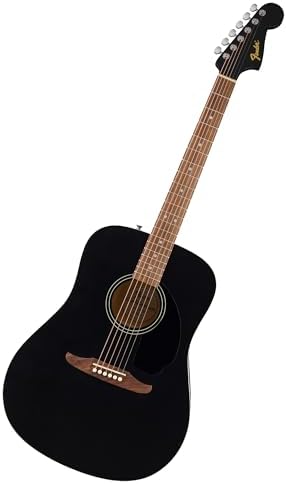
When it comes to the diversity of guitar styles, three major types stand out: acoustic, bass, and electric. Each type comes with its unique fret specifications.
Number of Frets on Standard Classical Guitars
Classical guitars typically hold 19 frets, adhering to a tuning system known as “equal temperament.” This system dictates how frets are spaced relative to semitones, ensuring they are positioned evenly apart. If you’re new to musical terminology, don’t worry—what’s essential to know is that this evenly spaced system makes it easier to transition between notes.
Number of Frets on Electric Guitars
Electric guitars often boast more frets than their classical counterparts. Most modern electric models, including specialized baritone guitars, generally come with either 22 or 24 frets. The increase in fret numbers can be traced back to the musical innovations of the 1930s, particularly in rock and metal genres.
Why is this significant? Many songs in these genres demand the ability to play high-pitched notes that reside near the end of the fretboard. With the additional frets, players can tackle challenging riffs and solos without needing to shift to the next string. In essence, guitars equipped with 23rd and 24th frets simplify access to a broader range of notes, easing the journey through more intricate musical landscapes.
Does the Number of Frets on a Guitar Matter?
While it may seem that a difference of five frets—between 19 and 24—is minimal, the implications on performance and genre specificity are substantial. Here are some vital considerations regarding guitars with different fret counts.
Aesthetic Considerations
For some guitarists, the visual appeal of extra frets can be a bonus. Curiosity often drives collectors to seek out guitars with a full set of frets—often more than 20—as they provide a sense of completeness. The look may not matter to everyone, but for those who take pride in their instruments, it can be significant.
More Frets Equals Higher Playable Tones
With additional frets on your guitar, you gain access to higher-pitched tones. For instance, if you’re using a standard-tuned 24-fret guitar, you can achieve two more half-steps than a 22-fret model, stretching your tonal range. This can be crucial for specific songs. Consider “Master of Puppets” by Metallica; it becomes challenging to perform on a 22-fret guitar since both the 23rd and 24th frets on the high E string are essential for nailing the riff.
That said, this principle may not hold true for lower strings. While having more frets does give you an extra half-step on those strings, they can often be played on a 22-fret instrument, albeit with some difficulty.
Playability Impact
Playing guitar not only requires technical skill but also physical agility. More frets mean that players can access a wider array of notes without necessarily switching strings. Suppose your desired notes are located on the 23rd or 24th frets; it will be far more convenient than shifting between lower frets. For example, finding middle C on a guitar would entail hitting the 20th fret on the 6th string. While this is rarely a requirement, a 19-fret acoustic guitar doesn’t even present that option.
However, guitars with extra frets do come with challenges. The construction of the guitar, especially regarding the neck and pickups, can impact playability. For instance, a double-cutaway body shape or a flat neck heel can greatly enhance access to those higher frets.
The Position of the Neck Pickup
One significant consideration when discussing the number of frets is the neck pickup’s location. Increasing the number of frets can push this pickup closer to the bridge, which can alter the instrument’s tonal quality. The scale length remains constant, but adding frets effectively lengthens the neck, moving the pickup further from the center and resulting in a thinner sound.
When comparing the tones produced by the same pickup in both the neck and bridge positions, you’ll notice that bridge pickups tend to sound brighter and sharper. This tonal difference arises due to the pickups’ respective distances from the center of a vibrating string.
How Far Apart Are the Frets on a Guitar?
As guitarists often discover, the spacing between frets isn’t uniform. As you move toward the guitar’s body, the distances decrease. Luthiers—experts in crafting stringed instruments—adhere to specific principles to maintain musical intervals. The placement of frets directly influences string length, which in turn dictates tonal pitch.
Traditionally, the gap between the nut and the first fret was standardized at about 18 mm, but modern guitar makers utilize varying formulas, leading to differing fret spacings. For optimally calculated distances based on string length and scale, you can even find digital fret calculators online.
Do You Really Need 24 Frets?
Is it essential to have a 24-fret guitar in your collection? For most players, the answer is no. Unless your repertoire leans heavily toward intense rock or metal genres, you may find that you rarely require access to the 23rd and 24th frets. In most cases, you can comfortably manage with 20 frets, especially if your focus is on easier riffs.
Ultimately, whether you opt for a guitar with fewer or more frets often comes down to personal preference and intended musical style. Many metal riffs can be effectively played on a 22-fret guitar.
What Are the Dots on a Guitar Fretboard For?
Now that you’re more familiar with frets, you might find yourself questioning the function of the dots located along the fretboard. These inlays serve as visual guides that help guitarists navigate their way across the fingerboard with ease.
Most guitars, although not all, come equipped with these indicators. The dots assist in making rapid transitions between different fret positions without needing to glance down constantly at the fingerboard. For example, if you’re jamming and need to jump to the 7th fret, the inlay located on the 5th fret serves as a handheld reference point, easing your movement.
Final Thoughts on Guitar Frets
Frets on a guitar play a vital role in enhancing accuracy, especially for chord playing. Without them, strumming correctly would be a significant challenge, as players would have to master the nuanced placements of each finger.
While the standard for electric guitars is generally 22 frets, and for classical guitars, it’s 19, both configurations can satisfy most players. If you’re aspiring to take your shredding to the next level, however, a guitar with 24 frets might be your best bet, particularly for genres requiring higher notes.
This post contains affiliate links. If you make a purchase through my links, I may receive a small commission at no additional cost to you. I only recommend products I truly believe in.
Understanding these elements can transform your guitar-playing experience, whether you’re a beginner or an advanced player. The key is to choose an instrument that aligns with your musical style and preferences, making your journey with the guitar all the more enjoyable.